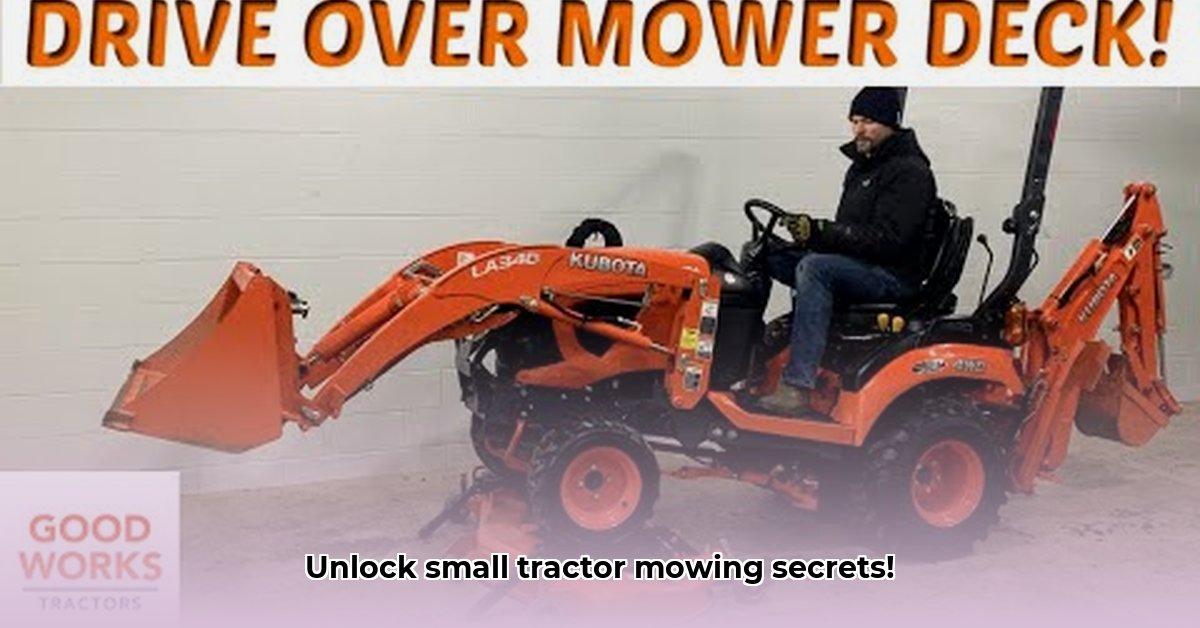
Choosing the Right Small Tractor for Sustainable Land Management
Thinking about boosting your farm's sustainability with a small tractor and mower deck? This guide provides a step-by-step approach to selecting and maintaining the right equipment for your needs. We'll focus on maximizing efficiency while minimizing environmental impact. Remember, the right tractor can significantly improve your operational efficiency and lower your environmental footprint. For more in-depth information on small tractors, check out this helpful resource: Small Tractor Guide.
Assessing Your Needs: Beyond Acreage
Before browsing tractor models, carefully assess your land and tasks. How many acres do you need to cover? A compact tractor is ideal for smaller yards or a few acres, but larger farms might require a more powerful model. Terrain is crucial: steep slopes need a tractor with exceptional stability and traction. Consider tasks beyond mowing, such as tilling, hauling, or snow removal. These will influence your choice of horsepower, attachments, and features.
Fuel Efficiency and Environmental Impact: Sustainable Power in Action
Fuel efficiency is paramount for sustainable farming. Look for tractors with advanced engine designs and efficient hydraulic systems. These features reduce fuel consumption, minimizing your environmental impact and saving you money. Some models are explicitly designed for low emissions, further reducing your carbon footprint. How much can you save on fuel annually with a highly efficient model? This will vary depending on your usage, but the savings might be substantial.
Mower Deck Selection: Optimizing Your Cutting Strategy
The mower deck significantly impacts efficiency and sustainability. Consider the cutting width: a wider deck covers more ground quickly but might be unsuitable for tight spaces. Furthermore, examine the cutting type; a mulching deck finely chops grass clippings, returning them to the lawn as natural fertilizer. This reduces fertilizer costs, enriches the soil, creates a healthier lawn, and minimizes waste. What is the optimal cutting width for your property and the type of vegetation you're managing? This will depend on the size of your yard and the density of your vegetation.
Selecting Your Tractor: A Practical, Step-by-Step Guide
Choosing the right tractor requires careful planning. Follow these steps:
Detailed Land Mapping: Precisely measure your property, noting any challenging terrain—slopes, dips, obstacles—to determine necessary maneuverability.
Comprehensive Task List: List all tasks beyond mowing (tilling, hauling, snow removal, etc.) to identify required power and features.
Thorough Model Research: Explore various models, focusing on horsepower, features (power steering, cushioned seat), and fuel efficiency data from independent sources.
Comparative Specification Analysis: Scrutinize cutting width, mower deck type (mulching, side discharge, rear discharge), and comfort and operational features.
Essential Accessory Identification: Determine which attachments (front-end loader, tiller) will enhance the tractor's versatility.
Budgetary Considerations: Calculate total cost of ownership, including purchase price, fuel, maintenance, repairs, and potential resale value.
Test Drive (If Feasible): If possible, test drive various models to assess comfort, ease of use, and handling.
Tractor Maintenance: Extending Lifespan and Optimizing Performance
Regular maintenance is crucial for maximizing your tractor's lifespan and efficiency. This includes:
Scheduled Oil Changes: Adhere to the manufacturer's recommended oil change schedule to ensure optimal engine performance and longevity.
Blade Sharpening/Replacement: Dull blades reduce cutting efficiency, increase fuel consumption, and can damage your lawn. Sharpen or replace blades regularly.
Protective Storage: Store your tractor in a dry, sheltered location to protect it from the elements and extend its useful life.
Long-Term Sustainability: Financial and Environmental Considerations
Investing in a small tractor can significantly improve sustainability and efficiency. While the initial cost is substantial, it can reduce labor, save money in the long run, and minimize your environmental impact through fuel efficiency and low emissions. However, remember to consider the life-cycle costs including fuel consumption, maintenance, and potential repairs over the lifespan of ownership. Ongoing technological advancements in fuel efficiency and emission control are constantly emerging; staying informed about these developments will provide better options in the near future.
Key Takeaways:
- Selecting the right small tractor requires a thorough assessment of your land, tasks, and budget.
- Fuel efficiency and low emissions are crucial for sustainable land management.
- Regular maintenance significantly extends the tractor's lifespan and optimizes its performance.
Choosing the right small tractor is a significant investment in the future of your sustainable farming practices. Remember that thorough research, careful planning, and diligent maintenance are key to maximizing your return on investment.